
Indian companies are increasingly opting for demergers, with 29 deals valued at over $40 billion in 2025 alone, marking a 10-year high, as promoters and boards recognise that markets favour focused businesses over complex conglomerates.

At the heart of this debate is Section 3(d) of the Patents Act, a safeguard designed to prevent drugmakers from extending monopoly protection through trivial modifications to existing medicines.

Buoyant domestic sales are expected to lift revenues for pharma companies by 8-11 per cent in Q3FY26, even as declining generic Revlimid (cancer drug) sales in the US remain a key drag. Most brokerages forecast a modest 2-4 per cent growth in profit after tax (PAT) for the quarter. Hospitals and diagnostics companies, meanwhile, are likely to post much stronger numbers, with revenues seen growing 20-22 per cent year-on-year (Y-o-Y).

Concerns over weakening demand for Indian pharmaceutical (pharma) drugs in the US - their largest export market - have weighed heavily on investor sentiment this year. While the Nifty 50 has gained 6.02 per cent year - to - date (as on September 15), the Nifty Pharma index has declined 5.18 per cent, National Stock Exchange data shows.

Drug maker Natco on Monday said that the Patent Office has upheld the firm's opposition to an application of Yeda Research & Development Company for patenting a generic version of a product of Teva Pharmaceutical Industries.

Domestic firms Aurobindo Pharma, Glenmark Pharmaceuticals and Natco Pharma have received US health regulator's approval to market their generic Rizatriptan Benzoate orally disintegrating tablets used for treating migraine in the American market.

In a landmark judgment that has the potential to change the direction of India's pharmaceutical business, the Supreme Court said on Monday that the drug failed to qualify for a patent according to Indian law.
Analysts are expecting pharmaceutical companies to post sales growth of 10-11 per cent in the second quarter this financial year while the Ebitda (earnings before interest, tax, depreciation, and amortisation) margins are anticipated to improve by about 110 basis points. Ebitda improvement will be led by lower input costs because prices of active pharmaceutical ingredients (APIs) are 5-15 per cent lower year-on-year (Y-o-Y). Axis Capital said sales growth would be around 10 per cent, of which growth in the India market would be 11 per cent or so.

The Union health ministry on Friday said license has been given to five more manufacturers for production of Amphotericin-B, used in the treatment of black fungus, and they will start producing 1,11,000 vials of the drug per month from July.

An acute drug shortage in the US and stable pricing along with product launches are likely to boost revenues of India's pharmaceutical companies during the first quarter of this financial year, analysts said. Most brokerages estimate a top line growth of around 14-15 per cent, with earnings before interest, taxes, depreciation, and amortisation (Ebitda) growth of 24-30 per cent for Q1 of FY24. Hospitals are, however, likely to report lower occupancy rates, and diagnostics companies may witness an impact from delayed monsoon.

The plan is to issue CLs for Trastuzumab (or Herceptin, used for treating breast cancer), Ixabepilone (used for chemotherapy in breast cancer treatment) and Dasatinib (or Sprycel, for leukaemia).

Shanghvi needs to deploy this excess cash.

If we are to realise the full potential of biologics' ability to improve people's health, it is essential to encourage public policy and support R&D.

Delegation visit ahead of patent law report.

India had been engaged in a contentious battle with the US over the issue, especially in the pharmaceutical sector.
Among the companies likely to sign deals with Gilead are Cadila, Hetero, Strides Arcolab and Mylan, while Cipla is expected to earn active pharmaceutical ingredient rights.

The Supreme Court had rejected the company's plea for a patent on cancer drug Glivec in April.

Ajit Mishra, vice president, Research, Religare Broking, answers your stock market queries.

Ajit Mishra, vice president, Research, Religare Broking, answers your queries.

India's IPR framework and enforcement were comparable to those in developed countries

The S&P BSE Sensex ended the session at 25,342, up 3 points while the Nifty50 closed at 7,738 points.

The USTR has placed India on its "priority watch" list for two years in a row, saying the country's patent laws unfairly favour local drug makers.

Ajit Mishra, vice president, Research, Religare Broking, answers your queries.

Index heavyweight RIL surged 3% to end above Rs 1,000 mark while IT majors were also the top gainers.

The Sensex closed down 308 points at 24,894 and the Nifty has lost 96 points at 7,559.

The 30-share Sensex ended down by 59 points at 27,027 and the 50-share Nifty slipped 7 points at 8,087.

Indian firm to soon launch copycat of anti-breast-cancer drug.

Natco Pharma, Wockhardt and Marksans have rallied between 50 and 70 per cent in the year till date.

The benchmark Nifty rallied 1,000 points or 17% from 7,000 in 78 trading sessions since May 12, till date to surpass the 8,000 mark.

'Pay-for-delay' settlements between drug patent-holders and generics manufacturers to delay the launch of cheaper generic medicine are increasingly being scrutinised by antitrust regulators

Sensex rises, Nifty ends at record high; RIL shares rally.

The Nikkei share average rose 2.6% to close at 15,195.77 points, more than recouping Tuesday's losses.
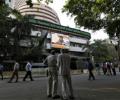
Benchmark share indices ended lower for the third straight session as investors turned cautious amid tensions in Iraq even as consumer durables shares stole the limelight tracking rally in gold prices.

Ajit Mishra, vice president, Research, Religare Broking, answers your queries:

Ajit Mishra, Vice President, Research, Religare Broking, answers readers' stock market queries. Ajit will offer his unbiased views on a weekly basis
Ajit Mishra, Vice President, Research, Religare Broking, answers readers's queries on stocks they own or want to buy.
